
Large-Scale Retail Spaces That Manage Crowds
Shopping Center & Mall Design in Las Vegas for developers creating multi-tenant commercial environments with diverse retail and entertainment uses
Properties with multiple retail tenants, anchor stores, dining areas, and entertainment zones require circulation planning that prevents bottlenecks during peak traffic periods. Daniel Downey Architect Chartered Limited designs shopping centers that balance tenant visibility with pedestrian flow, position anchor tenants to draw customers through inline retail corridors, and integrate parking access points that distribute arrival patterns across the site. The design addresses long-term tenant flexibility by creating demising wall locations that accommodate various suite sizes without compromising structural integrity or utility distribution.
Mall design involves calculating pedestrian capacity for main corridors and common areas, positioning restrooms and vertical circulation to serve the entire footprint, and planning loading zones that allow tenant deliveries without interfering with customer access. Anchor tenant spaces require separate HVAC systems, dedicated electrical services, and storefront configurations that integrate with the overall architectural character while allowing individual branding. The common area design controls sightlines so customers moving between anchors encounter inline retail displays, food court entries, and entertainment destinations.
Arrange a project consultation to evaluate how site dimensions and zoning parameters shape tenant mix and circulation strategies.
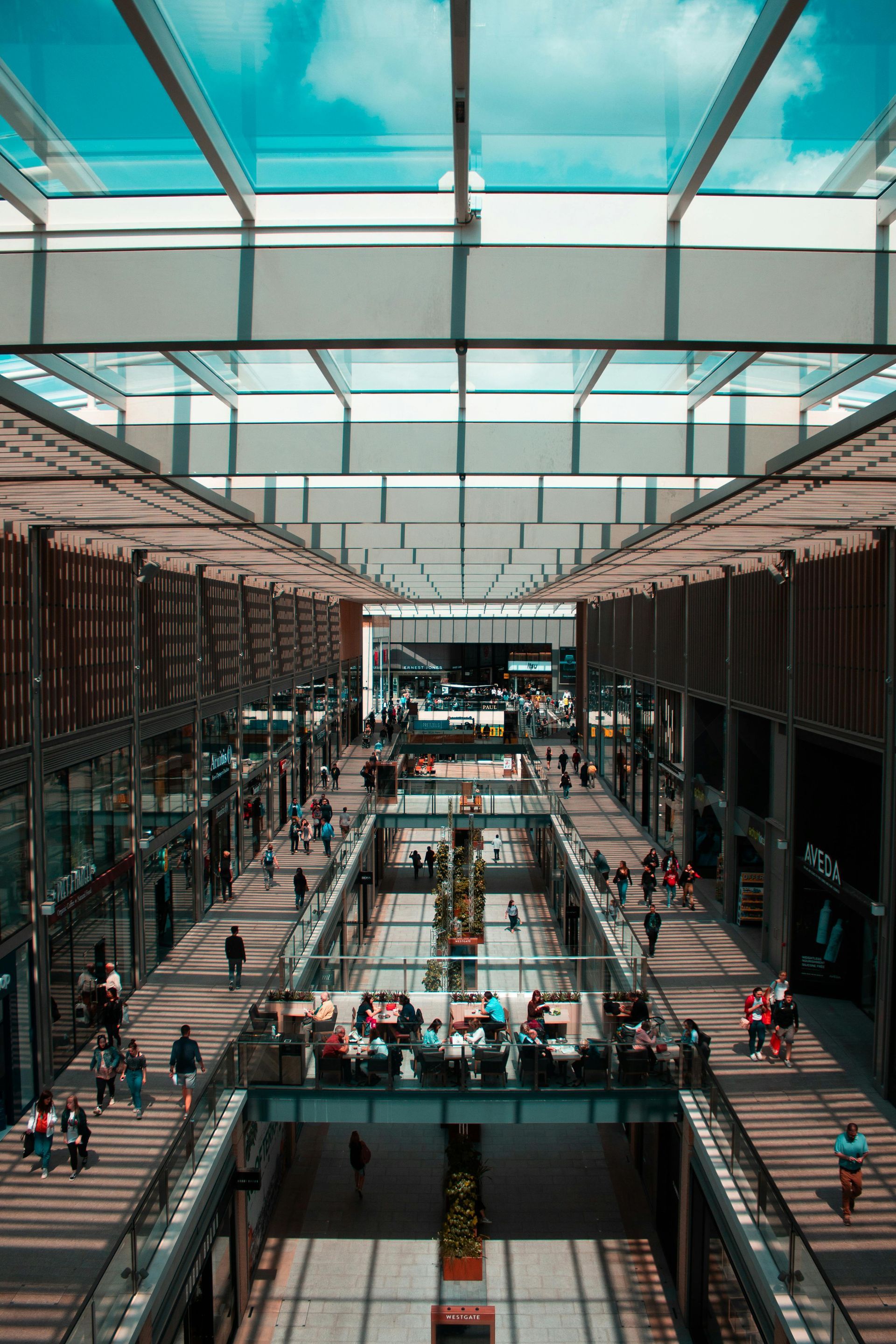
What Separates Functional Malls From Stagnant Ones
Successful shopping centers direct foot traffic through intentional anchor placement and corridor intersections that create decision points where customers notice surrounding retail options. The width of main walkways affects perceived crowding during holiday periods, while secondary corridors provide access to smaller tenants without creating dead zones that discourage leasing. Ceiling height and natural light penetration influence the atmosphere in common areas, with taller volumes and skylights reducing the enclosed feeling that drives customers toward exits rather than deeper into tenant spaces.
Once completed, your center operates with parking ratios that prevent overflow during peak retail seasons, entry sequences that transition customers from vehicular arrival to pedestrian shopping mode, and wayfinding that functions without excessive signage. The tenant demising system allows lease spaces to expand or contract as retailers adjust their footprint, with utility rough-ins positioned to serve multiple configurations. Exterior architecture establishes street presence while common area design maintains visual interest across long retail corridors.
The structural system supports future entertainment additions such as climbing facilities or dining pavilions, with foundation and roof designs that accommodate point loads from specialized installations. Mechanical infrastructure zones allow individual tenant control while maintaining base building efficiency, and electrical distribution supports varying power demands from restaurants, entertainment venues, and traditional retail without overloading service panels.