
Storefronts Designed Around Customer Movement
Retail Store Architecture in Las Vegas for businesses requiring layouts that guide shoppers and display merchandise effectively
Retail spaces fail when layouts create confusion about product location or place checkout counters where they interrupt browsing flow. The architecture positions entry transitions, product display zones, and service counters based on how customers naturally move through the space, with sightlines that reveal merchandise depth without overwhelming choices at the threshold. Daniel Downey Architect Chartered Limited designs retail stores that integrate branding elements into structural features, lighting design, and material selection, creating environments where the architecture reinforces brand identity while supporting operational efficiency from stockroom access to point-of-sale placement.
Store design involves calculating fixture spacing that allows comfortable browsing without wasted floor area, positioning fitting rooms or service counters to maximize sales floor visibility, and planning storefront glazing that attracts passersby while controlling solar heat gain in Las Vegas climate conditions. The layout accommodates both small boutiques requiring intimate scale and large retail chains needing standardized fixture systems, with ceiling height, column placement, and utility distribution designed around merchandise presentation requirements rather than generic commercial shell standards.
Schedule an initial meeting to assess how your product type and customer engagement model translate into spatial organization and architectural character.
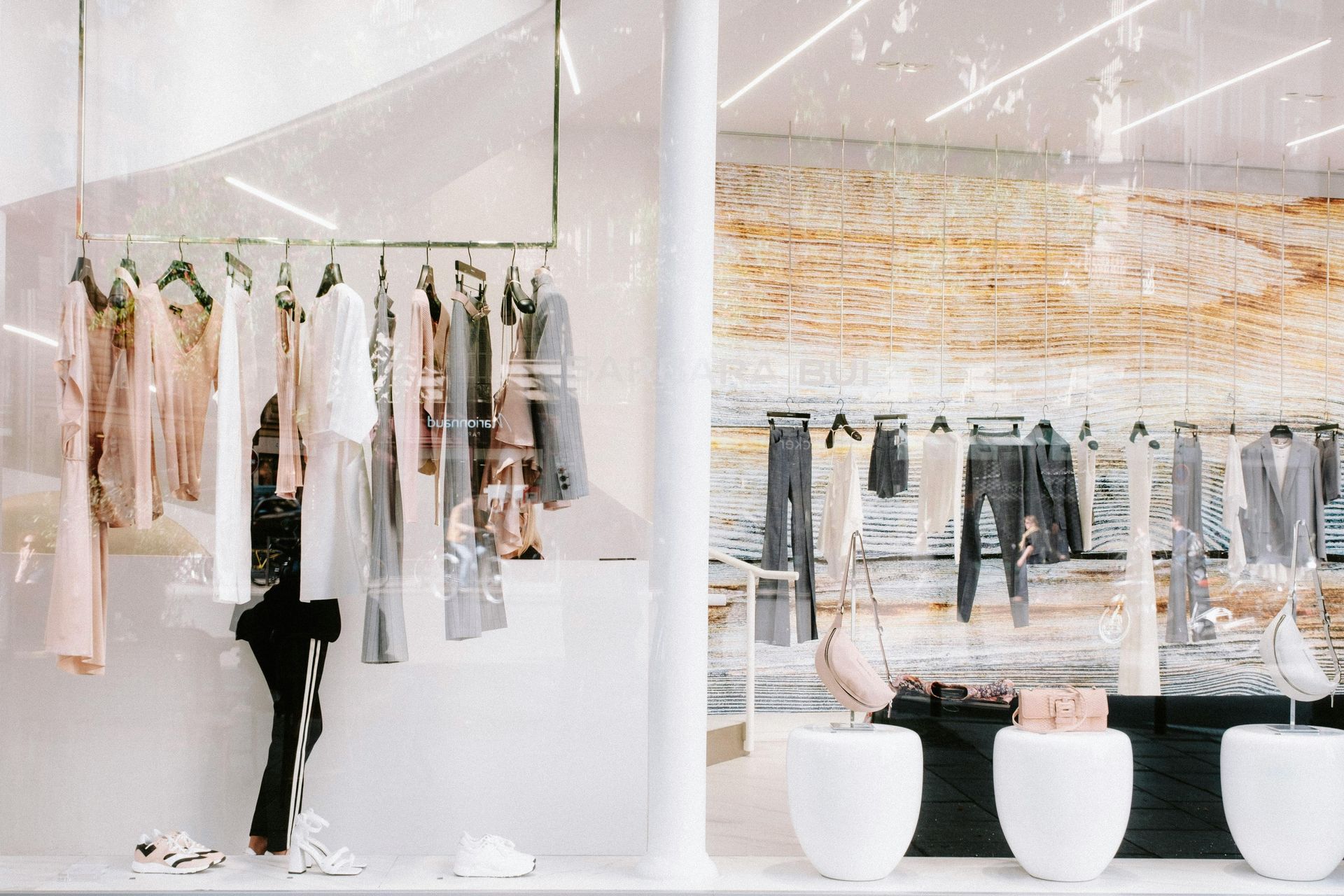
Why Product Visibility Depends on Spatial Planning
Customer flow begins at the entry sequence, where the transition from exterior to interior establishes brand tone and provides orientation cues about store layout. The path from entrance to back wall determines how much merchandise customers encounter, with strategic sightline breaks that create discovery moments rather than overwhelming visual clutter. Lighting design separates ambient illumination from accent fixtures that highlight featured products, while ceiling planes and floor material changes define zones without physical barriers that restrict movement or create claustrophobic subdivisions.
After the store opens, customers navigate without directional signage because the architecture establishes clear hierarchies between main circulation paths and browsing alcoves. Checkout placement allows staff to monitor the sales floor while processing transactions, and stockroom access integrates with the fixture layout so restocking occurs without disrupting the shopping environment. The storefront creates street presence through glazing proportions and entry geometry, with branding elements embedded in architectural features rather than applied as afterthoughts.
Fitting room locations balance privacy requirements with loss prevention sightlines, while service counters position staff where they can engage customers without creating barriers. The HVAC system maintains comfort without excessive air movement that disturbs lightweight merchandise displays, and electrical distribution supports flexible fixture arrangements as product lines change seasonally or inventory strategies evolve.