
Workspaces That Support Actual Productivity
Office Building Design in Las Vegas for companies requiring layouts that accommodate collaborative work and individual focus tasks
Open office plans collapse when they eliminate private work zones, while excessive subdivision creates isolation that prevents team coordination. Daniel Downey Architect Chartered Limited designs office spaces in Las Vegas that balance transparency with acoustic privacy, position meeting rooms and collaboration areas to absorb conversational noise away from concentration zones, and integrate natural light penetration that reduces reliance on artificial illumination throughout the workday. The layout accommodates future workforce changes through movable partition systems, flexible furniture arrangements, and utility distribution that supports workstation reconfiguration without infrastructure modifications.
Office design involves calculating occupant density to meet code egress requirements while maintaining comfortable spacing, planning HVAC zones that allow temperature control in areas with varying occupancy patterns, and positioning core functions—restrooms, vertical circulation, mechanical rooms—to maximize usable office area on each floor plate. Energy efficiency comes from glazing specifications that control solar heat gain in the desert climate, daylighting strategies that reduce electric lighting loads, and building envelope thermal performance that lowers cooling costs during extended Las Vegas summers.
Arrange a planning session to review how your operational structure and growth projections inform floor plate layout and building systems design.
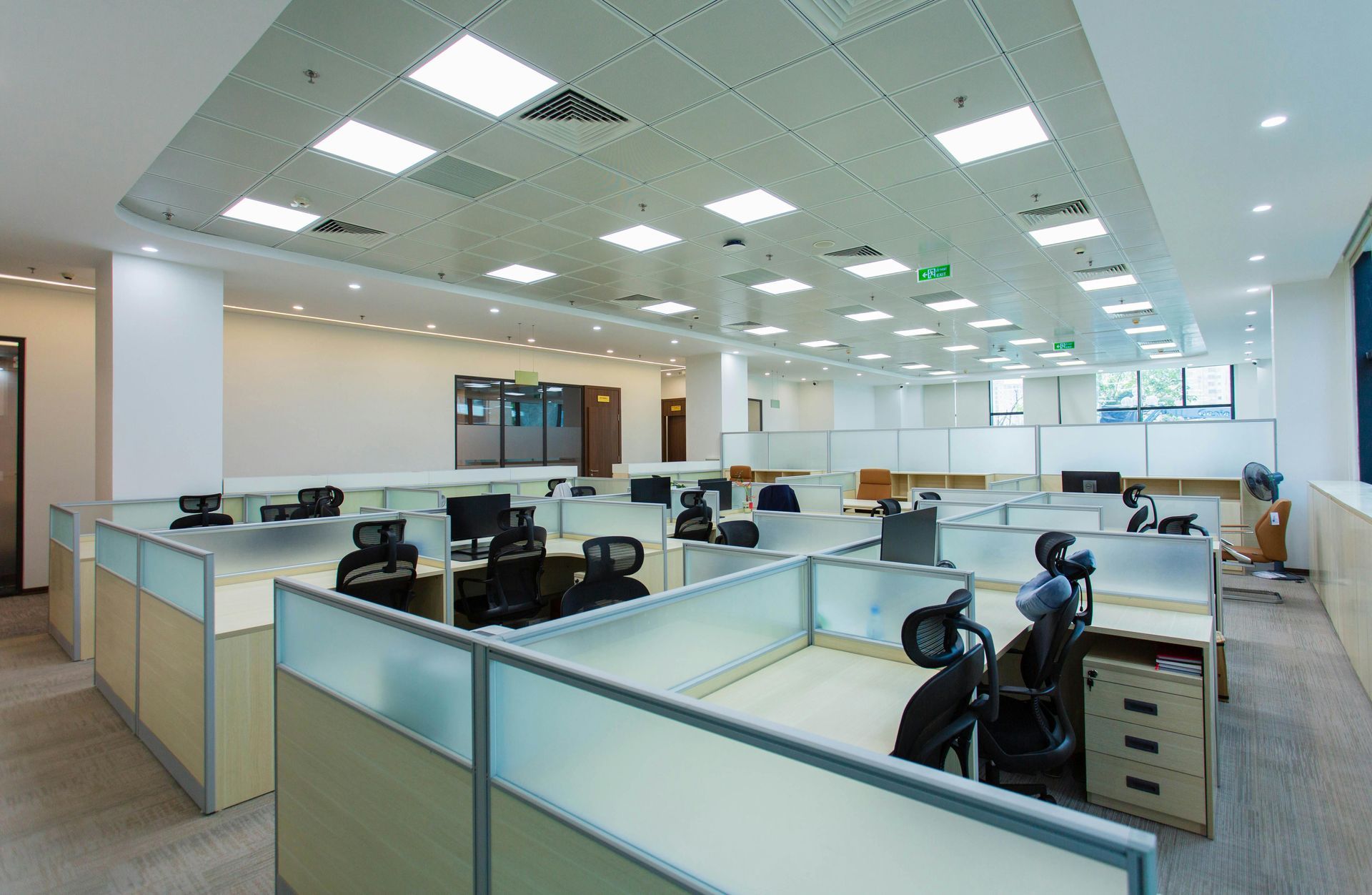
What Proper Office Design Requires
Functional office space directs workflow through adjacency planning that positions departments based on interaction frequency, with shared resources like printers and collaboration spaces accessible without traversing the entire floor. Window placement and interior glazing distribute natural light to workstations beyond the building perimeter, while acoustic design controls sound transmission between meeting rooms and open work areas. The structural grid accommodates partition placement without requiring columns in awkward locations that disrupt furniture layouts or create unusable corner spaces.
Once occupied, your office operates with HVAC systems that respond to varying loads as meeting rooms fill or empty, electrical capacity that supports technology infrastructure without circuit overloads, and vertical transportation that prevents elevator wait times during arrival and departure peaks. Workstation layouts allow reconfiguration as teams expand or contract, with raised floor systems or overhead cable trays that permit technology moves without disrupting adjacent occupants. Break areas and collaboration zones provide respite from desk work without requiring employees to leave the floor.
The building envelope addresses thermal bridging at connections that would otherwise create localized temperature discomfort, while glazing specifications balance views and daylighting against glare that forces occupants to close blinds and revert to artificial lighting. Stairwell design encourages inter-floor movement for small vertical trips, reducing elevator demand and promoting incidental physical activity.